
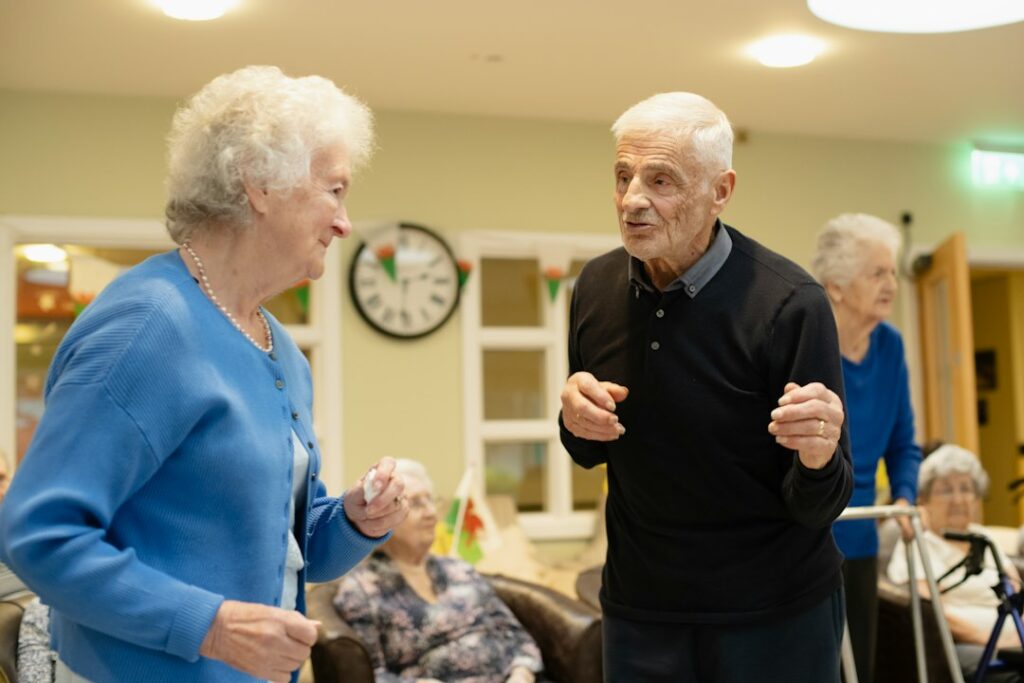
Healthy aging in assisted living is less about following a perfect routine and more about maintaining strength, connection, independence, and comfort through manageable daily habits. Residents can support their well-being by staying active, eating regularly, protecting sleep, taking medications safely, and speaking up when something changes.
How can assisted living residents stay physically active?
Regular movement helps preserve muscle strength, balance, flexibility, circulation, and confidence. Exercise does not need to be strenuous to be useful. Short periods of activity spread throughout the day can be safer and more realistic than a single demanding workout.
Helpful activities may include:
- Walking indoors or outdoors when conditions are safe
- Chair exercises, ankle movements, or gentle stretching
- Standing up and sitting down from a sturdy chair, if approved for the resident
- Light resistance exercises using approved bands or small weights
- Participating in movement classes or group activities
- Practicing balance exercises with supervision when needed
Residents should avoid pushing through chest pain, severe shortness of breath, dizziness, sudden weakness, or unusual pain. Anyone with a new health condition, recent surgery, repeated falls, or major changes in mobility may need individualized guidance before changing an exercise routine.
Seasonal conditions also affect activity. Cold surfaces, wet walkways, and reduced daylight can increase fall risks during winter. In warmer months, outdoor activity should be balanced with hydration, shade, and protection from excessive heat.
What foods support healthy aging?
A balanced eating pattern provides energy, protein, fiber, vitamins, and fluids. Older adults may have less appetite or become full quickly, so smaller meals and nutritious snacks can be helpful.
Meals should generally include a source of protein, such as eggs, yogurt, beans, fish, poultry, tofu, or other suitable foods. Protein supports muscle maintenance, healing, and strength. Fruits, vegetables, whole grains, and beans add fiber and nutrients that support digestion and heart health.
Residents can also ask about alternatives if chewing, swallowing, taste changes, or dental problems make eating difficult. Softer textures, modified seasonings, smaller portions, or snacks between meals may improve intake.
Dehydration can occur even when a person does not feel thirsty. Water, milk, broth, and other approved beverages can be offered throughout the day. Some residents may need fluid limits because of heart, kidney, or other medical conditions, so individual instructions should always take priority.
Unexpected weight loss, repeated skipped meals, difficulty swallowing, or a noticeable decline in appetite should be reported promptly.
How can residents protect balance and prevent falls?
Fall prevention begins with identifying risks before an accident happens. Clear walking paths, adequate lighting, properly fitted footwear, and accessible personal items can make everyday movement safer.
Residents should use prescribed mobility aids as directed and keep needed items within easy reach. Loose slippers, long clothing, unstable furniture, and rushing to the bathroom can create avoidable hazards.
Vision and hearing also affect balance. Updated glasses, hearing devices, and regular health checks may help residents notice obstacles, alarms, conversations, and changes in their surroundings.
A fall should not be dismissed simply because there is no obvious injury. New pain, confusion, weakness, difficulty walking, or a change in confidence may appear later. Reporting the event allows staff and medical professionals to look for contributing factors, such as medication effects, low blood pressure, vision problems, or environmental hazards.
Why do sleep and daily routines matter?
Consistent routines can support better sleep, mood, appetite, and memory. A regular wake-up time, exposure to daylight, daytime activity, and calming evening habits may help the body maintain a predictable sleep pattern.
Long or late naps can make nighttime sleep more difficult. Caffeine, discomfort, frequent nighttime urination, anxiety, and some medications may also interfere with rest.
Poor sleep is not always a normal part of aging. Loud snoring, gasping during sleep, persistent insomnia, nightmares, or significant daytime sleepiness deserve attention. Residents should mention these concerns rather than relying on over-the-counter sleep products, which may cause confusion, dizziness, constipation, or falls.
How can social connection support healthy aging?
Social activity is closely connected to emotional well-being and can encourage movement, regular meals, conversation, and mental stimulation. Residents may benefit from group meals, games, music, crafts, reading groups, exercise sessions, or informal visits.
Participation should remain a choice. Someone who prefers quiet activities may still benefit from one-on-one conversation, a phone call, time outdoors, or a familiar hobby. Social withdrawal that is sudden or persistent can signal depression, grief, pain, hearing difficulty, medication effects, or another health concern.
Family members and friends can make visits more comfortable by allowing extra time for conversation, reducing background noise, and focusing on familiar subjects. Meaningful connection does not require a large group or a busy schedule.
What helps maintain memory and independence?
Mental stimulation works best when it is enjoyable and appropriately challenging. Reading, writing, puzzles, card games, music, storytelling, cooking discussions, organizing photographs, and learning a new activity can all provide useful engagement.

Independence also includes making choices. Residents may be able to select clothing, meals, activities, seating, walking times, or personal routines. Adaptive tools, labeled belongings, calendars, reminder notes, and organized storage may make daily tasks easier without removing control.
A change in memory should be considered in context. Occasional forgetfulness is different from getting lost in familiar areas, repeatedly missing medications, becoming unable to manage familiar tasks, or showing sudden confusion. Sudden changes require prompt attention because infection, dehydration, medication problems, low blood sugar, stroke, or other urgent conditions may be involved.
How should residents manage medications safely?
Medication safety depends on an accurate, current list. Residents and families should know the names or purposes of medications, the timing, and any special instructions when possible. Over-the-counter products, vitamins, herbal supplements, and pain relievers should also be included because they can interact with prescribed medicines.
Residents should report unusual sleepiness, dizziness, constipation, diarrhea, confusion, rash, swelling, or changes in appetite after a medication change. Medication should not be stopped or altered without appropriate medical direction unless there is an emergency instruction already in place.
A medication review may be useful when a resident has repeated falls, new confusion, excessive fatigue, or several prescriptions managed by different clinicians.
What health changes should never be ignored?
Residents should promptly report symptoms that are new, worsening, or unusual for them. These may include:
- Sudden weakness, numbness, trouble speaking, or facial drooping
- Chest pressure, severe breathing difficulty, or fainting
- New confusion or a major change in alertness
- Persistent vomiting, severe diarrhea, or signs of dehydration
- Unexplained weight loss or repeated difficulty eating
- New swelling, wounds, pain, or difficulty walking
- Feelings of hopelessness, persistent sadness, or thoughts of self-harm
Timely communication helps distinguish a minor concern from a problem requiring urgent care. Residents are often the first to notice that something feels different, and that observation deserves to be taken seriously.
How can families support healthy aging from a distance?
Families can help by learning the resident’s normal routine, asking open-ended questions, and watching for changes in mood, appetite, mobility, sleep, and communication. Instead of asking only whether everything is fine, questions such as “What has been easier or harder this week?” may reveal useful details.
A simple shared record of appointments, medication changes, falls, dietary concerns, and new symptoms can reduce confusion. Families should also respect the resident’s preferences and privacy while making sure important health concerns are communicated appropriately.
Healthy aging in assisted living is built through steady attention to everyday needs: safe movement, nourishing food, restful sleep, meaningful relationships, medication awareness, and early reporting of changes.
